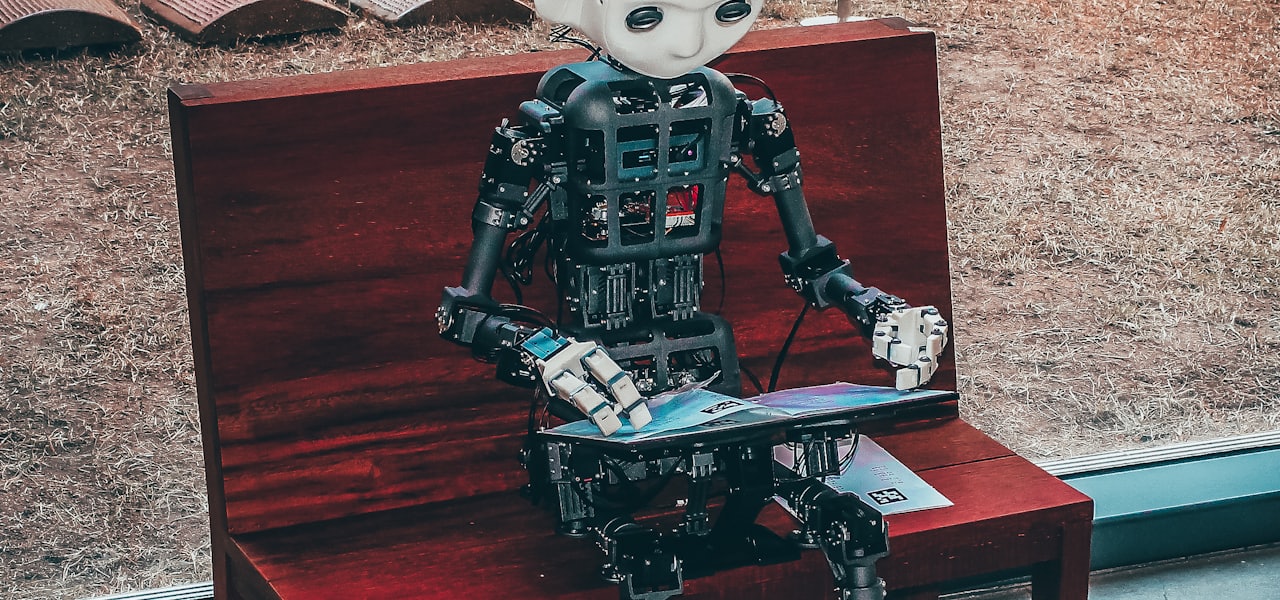
Moving object detection is a technique used in computer vision and image processing. Multiple consecutive frames from a video are compared by various methods to determine if any moving object is detected. Moving objects detection has been used for wide range of applications like video surveillance, activity recognition, road condition monitoring, airport safety, monitoring of protection along marine border, etc. == Definition == Moving object detection is to recognize the physical movement of an object in a given place or region. By acting segmentation among moving objects and stationary area or region, the moving objects' motion can be tracked and thus analyzed later. To achieve this, consider a video is a structure built upon single frames, moving object detection is to find the foreground moving target(s), either in each video frame or only when the moving target shows the first appearance in the video. == Traditional methods == Among all the traditional moving object detection methods, we could categorize them into four major approaches: Background subtraction, Frame differencing, Temporal Differencing, and Optical Flow. === Frame differencing === Instead of using traditional approach, to use image subtraction operator by subtracting second and images afterwards, the frame differencing method makes comparisons between two successive frames to detect moving targets. === Temporal differencing === The temporal differencing method identifies the moving object by applying pixel-wise difference method with two or three consecutive frames.
Load file
A load file in the litigation community is commonly referred to as the file used to import data (coded, captured or extracted data from ESI processing) into a database; or the file used to link images. These load files carry commands, commanding the software to carry out certain functions with the data found in them. Load files are usually ASCII text files that have delimited fields of information. Such load files may have data about documents to be imported into a document management software such as Concordance or Summation. Or they may have the path or directory where images may reside so that the software can link such images to their corresponding records. Some database programs take one load file for importing images and another for importing data while others take only one load file for both pieces of information. OCR or Search-able Text which is considered "data" is also imported into most database programs via the same load files. Though some people prefer to load the OCR into their databases by running a separate command to search and find the desired text. Commonly used databases and their corresponding file extensions are: Summation (DII , CSV), Concordance (OPT, DAT), Sanction (SDT), IPRO (LFP), Ringtail (MDB) and DB/TextWorks (TXT).
Douwe Kiela
Douwe Kiela is a Dutch-American research scientist and entrepreneur working in the field of artificial intelligence with a focus on machine learning and natural language processing. He is a research scientist director at Google DeepMind. He previously co-founded and served as CEO of Contextual AI, an enterprise software company that provides a platform for building grounded AI agents for enterprise knowledge bases. He previously led the research team at Meta AI that introduced the RAG approach in 2020, co-authoring the foundational paper "Retrieval-Augmented Generation for Knowledge-Intensive NLP Tasks." Kiela also served as Head of Research at Hugging Face and is an adjunct professor in Symbolic Systems at Stanford University. == Early life and education == Douwe Kiela was born in Amsterdam, Netherlands, in 1986. He earned a Bachelor of Science degree in Liberal Arts and Sciences from Utrecht University, with a double major in Cognitive Artificial Intelligence and Philosophy. He then obtained an MSc in logic (cum laude) from the University of Amsterdam's Institute for Logic, Language and Computation (ILLC). Kiela received an MPhil and PhD in Computer Science from the University of Cambridge, specializing in natural language processing and machine learning. == Career == === Facebook AI Research (Meta) === In 2016, Kiela joined Facebook AI Research (FAIR) as a postdoctoral researcher, later becoming a research scientist in New York. While at Meta, he co-authored papers in natural language processing, with a focus on multimodal and grounded language learning. His projects included creating a virtual assistant bot that could navigate tourists around a city and leading the development of Dynabench, an interactive benchmarking platform released in 2020 that used human feedback to test and improve language models. In 2020, Kiela led the Meta AI research team that introduced Retrieval-Augmented Generation (RAG), co-authoring the influential paper "Retrieval-Augmented Generation for Knowledge-Intensive NLP Tasks," alongside Patrick Lewis, Ethan Perez, and other researchers. The RAG framework transformed how large language models access and incorporate external information by allowing them to retrieve relevant context from external knowledge bases at query time, rather than relying solely on pre-trained data. This approach addressed key limitations such as hallucination, outdated information, and lack of source attribution. The RAG technique has since become widely adopted in enterprise AI applications and knowledge-intensive natural language processing tasks. === Hugging Face === After leaving Meta, Kiela served as Head of Research at Hugging Face. === Contextual AI === In 2023, Kiela co-founded Contextual AI with Amanpreet Singh, another former researcher at Facebook AI Research and Hugging Face. The Mountain View-based company develops a platform for building grounded AI agents for enterprises, focusing on applications in technology, semiconductor, logistics, finance, and media sectors. Contextual AI raised $20 million in seed funding in June 2023, led by Bain Capital Ventures. In August 2024, the company completed an $80 million Series A funding round led by Greycroft, with participation from Bezos Expeditions, NVentures (Nvidia), HSBC Ventures, and Snowflake Ventures, among others. In May 2026, Kiela joined Google DeepMind as part of a licensing agreement between Google and Contextual AI under which more than 20 Contextual AI researchers joined DeepMind. Following his departure, Jay Chen became interim CEO of Contextual AI. === Academic roles === Douwe Kiela serves as an adjunct professor in Symbolic Systems at Stanford University. In a 2023 interview with the Stanford Daily, he commented on the development of Alpaca, a low-cost instruction-finetuned model based on Meta's LLaMA, and emphasized the importance of open academic research in large language models.
Markov switching multifractal
In financial econometrics (the application of statistical methods to economic data), the Markov-switching multifractal (MSM) is a model of asset returns developed by Laurent E. Calvet and Adlai J. Fisher that incorporates stochastic volatility components of heterogeneous durations. MSM captures the outliers, log-memory-like volatility persistence and power variation of financial returns. In currency and equity series, MSM compares favorably with standard volatility models such as GARCH(1,1) and FIGARCH both in- and out-of-sample. MSM is used by practitioners in the financial industry for different types of forecasts. == MSM specification == The MSM model can be specified in both discrete time and continuous time. === Discrete time === Let P t {\displaystyle P_{t}} denote the price of a financial asset, and let r t = ln ( P t / P t − 1 ) {\displaystyle r_{t}=\ln(P_{t}/P_{t-1})} denote the return over two consecutive periods. In MSM, returns are specified as r t = μ + σ ¯ ( M 1 , t M 2 , t . . . M k ¯ , t ) 1 / 2 ϵ t , {\displaystyle r_{t}=\mu +{\bar {\sigma }}(M_{1,t}M_{2,t}...M_{{\bar {k}},t})^{1/2}\epsilon _{t},} where μ {\displaystyle \mu } and σ {\displaystyle \sigma } are constants and { ϵ t {\displaystyle \epsilon _{t}} } are independent standard Gaussians. Volatility is driven by the first-order latent Markov state vector: M t = ( M 1 , t M 2 , t … M k ¯ , t ) ∈ R + k ¯ . {\displaystyle M_{t}=(M_{1,t}M_{2,t}\dots M_{{\bar {k}},t})\in R_{+}^{\bar {k}}.} Given the volatility state M t {\displaystyle M_{t}} , the next-period multiplier M k , t + 1 {\displaystyle M_{k,t+1}} is drawn from a fixed distribution M with probability γ k {\displaystyle \gamma _{k}} , and is otherwise left unchanged. The transition probabilities are specified by γ k = 1 − ( 1 − γ 1 ) ( b k − 1 ) {\displaystyle \gamma _{k}=1-(1-\gamma _{1})^{(b^{k-1})}} . The sequence γ k {\displaystyle \gamma _{k}} is approximately geometric γ k ≈ γ 1 b k − 1 {\displaystyle \gamma _{k}\approx \gamma _{1}b^{k-1}} at low frequency. The marginal distribution M has a unit mean, has a positive support, and is independent of k. ==== Binomial MSM ==== In empirical applications, the distribution M is often a discrete distribution that can take the values m 0 {\displaystyle m_{0}} or 2 − m 0 {\displaystyle 2-m_{0}} with equal probability. The return process r t {\displaystyle r_{t}} is then specified by the parameters θ = ( m 0 , μ , σ ¯ , b , γ 1 ) {\displaystyle \theta =(m_{0},\mu ,{\bar {\sigma }},b,\gamma _{1})} . Note that the number of parameters is the same for all k ¯ > 1 {\displaystyle {\bar {k}}>1} . === Continuous time === MSM is similarly defined in continuous time. The price process follows the diffusion: d P t P t = μ d t + σ ( M t ) d W t , {\displaystyle {\frac {dP_{t}}{P_{t}}}=\mu dt+\sigma (M_{t})\,dW_{t},} where σ ( M t ) = σ ¯ ( M 1 , t … M k ¯ , t ) 1 / 2 {\displaystyle \sigma (M_{t})={\bar {\sigma }}(M_{1,t}\dots M_{{\bar {k}},t})^{1/2}} , W t {\displaystyle W_{t}} is a standard Brownian motion, and μ {\displaystyle \mu } and σ ¯ {\displaystyle {\bar {\sigma }}} are constants. Each component follows the dynamics: The intensities vary geometrically with k: γ k = γ 1 b k − 1 . {\displaystyle \gamma _{k}=\gamma _{1}b^{k-1}.} When the number of components k ¯ {\displaystyle {\bar {k}}} goes to infinity, continuous-time MSM converges to a multifractal diffusion, whose sample paths take a continuum of local Hölder exponents on any finite time interval. == Inference and closed-form likelihood == When M {\displaystyle M} has a discrete distribution, the Markov state vector M t {\displaystyle M_{t}} takes finitely many values m 1 , . . . , m d ∈ R + k ¯ {\displaystyle m^{1},...,m^{d}\in R_{+}^{\bar {k}}} . For instance, there are d = 2 k ¯ {\displaystyle d=2^{\bar {k}}} possible states in binomial MSM. The Markov dynamics are characterized by the transition matrix A = ( a i , j ) 1 ≤ i , j ≤ d {\displaystyle A=(a_{i,j})_{1\leq i,j\leq d}} with components a i , j = P ( M t + 1 = m j | M t = m i ) {\displaystyle a_{i,j}=P\left(M_{t+1}=m^{j}|M_{t}=m^{i}\right)} . Conditional on the volatility state, the return r t {\displaystyle r_{t}} has Gaussian density f ( r t | M t = m i ) = 1 2 π σ 2 ( m i ) exp [ − ( r t − μ ) 2 2 σ 2 ( m i ) ] . {\displaystyle f(r_{t}|M_{t}=m^{i})={\frac {1}{\sqrt {2\pi \sigma ^{2}(m^{i})}}}\exp \left[-{\frac {(r_{t}-\mu )^{2}}{2\sigma ^{2}(m^{i})}}\right].} === Conditional distribution === === Closed-form Likelihood === The log likelihood function has the following analytical expression: ln L ( r 1 , … , r T ; θ ) = ∑ t = 1 T ln [ ω ( r t ) . ( Π t − 1 A ) ] . {\displaystyle \ln L(r_{1},\dots ,r_{T};\theta )=\sum _{t=1}^{T}\ln[\omega (r_{t}).(\Pi _{t-1}A)].} Maximum likelihood provides reasonably precise estimates in finite samples. === Other estimation methods === When M {\displaystyle M} has a continuous distribution, estimation can proceed by simulated method of moments, or simulated likelihood via a particle filter. == Forecasting == Given r 1 , … , r t {\displaystyle r_{1},\dots ,r_{t}} , the conditional distribution of the latent state vector at date t + n {\displaystyle t+n} is given by: Π ^ t , n = Π t A n . {\displaystyle {\hat {\Pi }}_{t,n}=\Pi _{t}A^{n}.\,} MSM often provides better volatility forecasts than some of the best traditional models both in and out of sample. Calvet and Fisher report considerable gains in exchange rate volatility forecasts at horizons of 10 to 50 days as compared with GARCH(1,1), Markov-Switching GARCH, and Fractionally Integrated GARCH. Lux obtains similar results using linear predictions. == Applications == === Multiple assets and value-at-risk === Extensions of MSM to multiple assets provide reliable estimates of the value-at-risk in a portfolio of securities. === Asset pricing === In financial economics, MSM has been used to analyze the pricing implications of multifrequency risk. The models have had some success in explaining the excess volatility of stock returns compared to fundamentals and the negative skewness of equity returns. They have also been used to generate multifractal jump-diffusions. == Related approaches == MSM is a stochastic volatility model with arbitrarily many frequencies. MSM builds on the convenience of regime-switching models, which were advanced in economics and finance by James D. Hamilton. MSM is closely related to the Multifractal Model of Asset Returns. MSM improves on the MMAR's combinatorial construction by randomizing arrival times, guaranteeing a strictly stationary process. MSM provides a pure regime-switching formulation of multifractal measures, which were pioneered by Benoit Mandelbrot.
Collocation
In corpus linguistics, a collocation is a series of words or terms that co-occur more often than would be expected by chance. In phraseology, a collocation is a type of compositional phraseme, meaning that it can be understood from the words that make it up. This contrasts with an idiom, where the meaning of the whole cannot be inferred from its parts, and may be completely unrelated. There are about seven main types of collocations: adjective + noun, noun + noun (such as collective nouns), noun + verb, verb + noun, adverb + adjective, verbs + prepositional phrase (phrasal verbs), and verb + adverb. Collocation extraction is a computational technique that finds collocations in a document or corpus, using various computational linguistics elements resembling data mining. == Expanded definition == Collocations are partly or fully fixed expressions that become established through repeated context-dependent use. Such terms as crystal clear, middle management, nuclear family, and cosmetic surgery are examples of collocated pairs of words. Collocations can be in a syntactic relation (such as verb–object: make and decision), lexical relation (such as antonymy), or they can be in no linguistically defined relation. Knowledge of collocations is vital for the competent use of a language: a grammatically correct sentence will stand out as awkward if collocational preferences are violated. This makes collocation a common focus for language teaching. Corpus linguists specify a key word in context (KWIC) and identify the words immediately surrounding them, to illustrate the way words are used in practice. The processing of collocations involves a number of parameters, the most important of which is the measure of association, which evaluates whether the co-occurrence is purely by chance or statistically significant. Due to the non-random nature of language, most collocations are classed as significant, and the association scores are simply used to rank the results. Commonly used measures of association include mutual information, t scores, and log-likelihood. Rather than select a single definition, Gledhill proposes that collocation involves at least three different perspectives: co-occurrence, a statistical view, which sees collocation as the recurrent appearance in a text of a node and its collocates; construction, which sees collocation either as a correlation between a lexeme and a lexical-grammatical pattern, or as a relation between a base and its collocative partners; and expression, a pragmatic view of collocation as a conventional unit of expression, regardless of form. These different perspectives contrast with the usual way of presenting collocation in phraseological studies. Traditionally speaking, collocation is explained in terms of all three perspectives at once, in a continuum: == In dictionaries == In 1933, Harold Palmer's Second Interim Report on English Collocations highlighted the importance of collocation as a key to producing natural-sounding language, for anyone learning a foreign language. Thus from the 1940s onwards, information about recurrent word combinations became a standard feature of monolingual learner's dictionaries. As these dictionaries became "less word-centred and more phrase-centred", more attention was paid to collocation. This trend was supported, from the beginning of the 21st century, by the availability of large text corpora and intelligent corpus-querying software, making it possible to provide a more systematic account of collocation in dictionaries. Using these tools, dictionaries such as the Macmillan English Dictionary and the Longman Dictionary of Contemporary English included boxes or panels with lists of frequent collocations. There are also a number of specialized dictionaries devoted to describing the frequent collocations in a language. These include (for Spanish) Redes: Diccionario combinatorio del español contemporaneo (2004), (for French) Le Robert: Dictionnaire des combinaisons de mots (2007), and (for English) the LTP Dictionary of Selected Collocations (1997) and the Macmillan Collocations Dictionary (2010). == Statistically significant collocation == Student's t-test can be used to determine whether the occurrence of a collocation in a corpus is statistically significant. For a bigram w 1 w 2 {\displaystyle w_{1}w_{2}} , let P ( w 1 ) = # w 1 N {\displaystyle P(w_{1})={\frac {\#w_{1}}{N}}} be the unconditional probability of occurrence of w 1 {\displaystyle w_{1}} in a corpus with size N {\displaystyle N} , and let P ( w 2 ) = # w 2 N {\displaystyle P(w_{2})={\frac {\#w_{2}}{N}}} be the unconditional probability of occurrence of w 2 {\displaystyle w_{2}} in the corpus. The t-score for the bigram w 1 w 2 {\displaystyle w_{1}w_{2}} is calculated as: where x ¯ = # w i w j N {\displaystyle {\bar {x}}={\frac {\#w_{i}w_{j}}{N}}} is the sample mean of the occurrence of w 1 w 2 {\displaystyle w_{1}w_{2}} , # w 1 w 2 {\displaystyle \#w_{1}w_{2}} is the number of occurrences of w 1 w 2 {\displaystyle w_{1}w_{2}} , μ = P ( w i ) P ( w j ) {\displaystyle \mu =P(w_{i})P(w_{j})} is the probability of w 1 w 2 {\displaystyle w_{1}w_{2}} under the null-hypothesis that w 1 {\displaystyle w_{1}} and w 2 {\displaystyle w_{2}} appear independently in the text, and s 2 = x ¯ ( 1 − x ¯ ) ≈ x ¯ {\displaystyle s^{2}={\bar {x}}(1-{\bar {x}})\approx {\bar {x}}} is the sample variance. With a large N {\displaystyle N} , the t-test is equivalent to a Z-test.
Infogram
Infogram is a web-based data visualization and infographics platform, created in Riga, Latvia. It allows people to make and share digital charts, infographics and maps. Infogram offers an intuitive WYSIWYG editor that converts users’ data into infographics that can be published, embedded or shared. Users do not need coding skills to use this tool; users include newsrooms, marketing teams, governments, educators and students. The company that created Infogram, also called Infogram, was founded in 2012 in Riga, Latvia and has another office in San Francisco. As of October 2017, Infogram says it has 3 million users who have created charts and infographics that have been viewed more than 1.5 billion times. Infogram was bought by Prezi, a web-based presentation software company, in May 2017. == History == Infogram was founded in February 2012 in Riga, Latvia by Uldis Leiterts, Raimonds Kaže and Alise Dīrika. In January 2013, Infogram won the international Hy Berlin pitch contest. During his pitch, Infogram CEO Uldis Leiterts announced that the company had created more templates and was working with Microsoft to integrate its platform with the contemporaneous version of Microsoft Office. The company also won the 2013 Kantar Information Is Beautiful Award, which “celebrates excellence and beauty in data visualizations, infographics, interactives & information art.” In December 2014, Infogram acquired the Brazil-based data visualization blog, Visualoop. In an effort to expand sales and marketing in the U.S., Infogram secured $1.8 million in funding in February 2014. The announcement was made at TechChill, a startup conference for the Baltics in Riga, Latvia. At the time, the funding was believed to be the largest to date for the company. Infogram won the 2017 National Design Award of Latvia. == Acquisition by Prezi == Prezi, a web-based presentation software company, acquired Infogram in May 2017. Infogram is now a wholly owned subsidiary of Prezi. Infogram was rated #1 on Forbes’ list of “The Best Infographic Tools for 2017,” which was published in September 2017. In October 2017, Infogram announced a new version of its data visualization platform, including a drag-and-drop editor, over 40 new designer templates and social media support.
Datacap
Datacap (an IBM Company), a privately owned company, manufactures and sells computer software, and services. Datacap's first product, Paper Keyboard, was a "forms processing" product and shipped in 1989. In August 2010, IBM announced that it had acquired Datacap for an undisclosed amount. == Overview == Datacap sells products through a value-added distribution network worldwide. The software is classified as "enterprise software", meaning that it requires trained professionals to install and configure. Although the Company has focused on providing solutions for scanning paper documents, most recently Company materials have emphasized customer requirements to handle electronic documents ("eDocs"), documents being received into an organization electronically (usually email). Datacap claims that its software is unique because of the rules engine ("Rulerunner") used for processing inbound documents, including performing the image processing (deskew, noise removal, etc.), optical character recognition (OCR), intelligent character recognition (ICR), validations, and export-release formatting of extracted data to target ERP and line of business application.